



Matrix On Point
REGISTER

Event Date: October 28th, 2026
3:30pm-5:00pm
Matrix on Point: The State of U.S. Immigration Enforcement and Surveillance
Federal immigration enforcement in the United States is increasingly shaped by the convergence of surveillance technologies, data systems, and on-the-ground policing practices. This panel will bring together a group of scholars from diverse disciplines to examine the social and political consequences — and the stakes for rights in an era of technological governance.
Learn More >CRELS
Recap

Published April 23, 2025
Alex Roehrkasse: The New Contours of Mass Incarceration
Recorded on March 18, 2025, this video features a talk by Alexander F. Roehrkasse, Assistant Professor of Sociology and Criminology at Butler University. In the talk, Roehrkasse presents new evidence of declining Black–White inequality and skyrocketing educational inequality in U.S. prison admissions.
Learn More >Matrix On Point
Recap

Published April 10, 2025
Mainstreaming Psychedelics
Psychedelics are steadily moving from the fringes of counterculture to the heart of mainstream society, driven by a growing body of research and shifting public perception. As psychedelics shed their stigma, they are catalyzing a broader conversation about mental health, spirituality, and the boundaries of human consciousness. Recorded on March 6, 2025, this panel featured Diana Negrin, David Presti, Charles Hirschkind, and Graham Pechenik, with Poulomi Saha moderating.
Learn More >Podcast
Interview

Published April 1, 2025
Social, Spatial, Ecological, and Racial Fixes in New Deal South Carolina: Interview with Morgan Vickers
This episode of the Matrix Podcast features an interview with Morgan P. Vickers, an Assistant Professor of Race/Racialization in the Department of Law, Societies & Justice at the University of Washington. Vickers received their Ph.D. in Geography from UC Berkeley.
Learn More >Interview
Interview
Published March 28, 2025
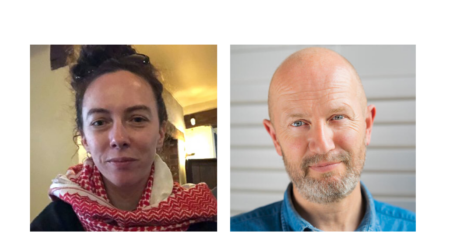
The State of Higher Education: Interview with Lorna Finlayson
As universities across England and Wales continue to announce redundancies and close departments and programs, James Vernon, Director of the Global Democracy Commons project, spoke with political theorist Lorna Finlayson about the nature of the crisis, why academics are relatively restrained in their responses to it, and how students offer some hope for alternative visions of higher education.
Learn More >Matrix On Point
Recap

Published March 12, 2025
Los Angeles Wildfires: Risk, Resilience, and Collective Action
Watch the video (or listen to the podcast) of this Matrix on Point panel focused on the management of wildfires in urban areas, recorded in the weeks following the devastating fires in Los Angeles. The panel featured Christopher Ansell, Kenichi Soga, and Marta Gonzalez, and was moderated by Louise Comfort.
Learn More >Authors Meet Critics
Recap
Published March 12, 2025
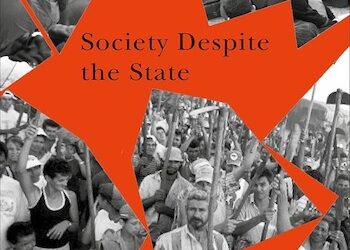
Society Despite the State: Reimagining Geographies of Order
Recorded on February 10, 2025, this "Authors Meet Critics" panel centered on the book "Society Despite the State: Reimagining Geographies of Order," by Gerónimo Barrera de la Torre, Assistant Professor of Geography at UC Berkeley, and Anthony Ince, Senior Lecturer (Associate Professor) in Human Geography at Cardiff University and British Academy Mid-Career Fellow. The authors were joined in conversation by Dylan John Riley and Anna Stilz, and Jake Kosek moderated.
Learn More >