



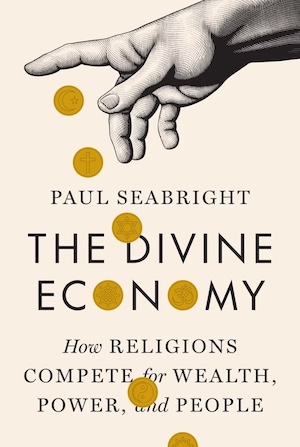
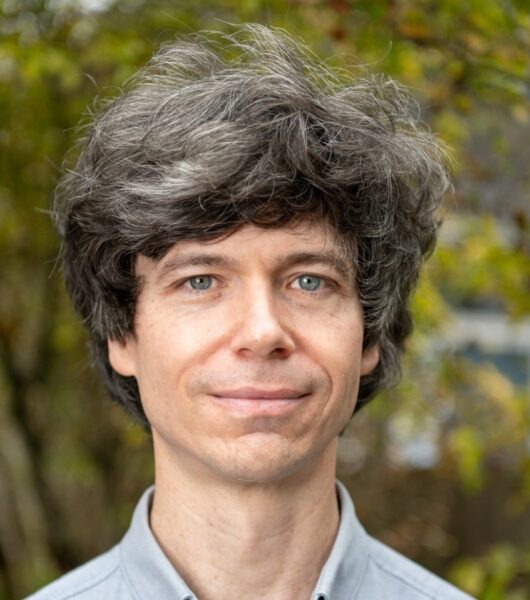
Please register to join us on May 1 at 3:30pm for a lecture by Paul Seabright, based on his book The Divine Economy: How Religions Compete for Wealth, Power and People, a novel economic interpretation of how religions have become so powerful in the modern world. Seabright is a British economist working at the Toulouse School of Economics and the Institute for Advanced Study in Toulouse, France.
The talk will be moderated by Duncan MacRae, Associate Professor in the Department of Ancient Greek and Roman Studies at UC Berkeley, where he is also on the faculty of the Graduate Group in Ancient History and Mediterranean Archaeology.
About the Book
Religion in the twenty-first century is alive and well across the world, despite its apparent decline in North America and parts of Europe. Vigorous competition between and within religious movements has led to their accumulating great power and wealth. Religions in many traditions have honed their competitive strategies over thousands of years. Today, they are big business; like businesses, they must recruit, raise funds, disburse budgets, manage facilities, organize transportation, motivate employees, and get their message out. In The Divine Economy, economist Paul Seabright argues that religious movements are a special kind of business: they are platforms, bringing together communities of members who seek many different things from one another—spiritual fulfilment, friendship and marriage networks, even business opportunities. Their function as platforms, he contends, is what has allowed religions to consolidate and wield power.
This power can be used for good, especially when religious movements provide their members with insurance against the shocks of modern life, and a sense of worth in their communities. It can also be used for harm: political leaders often instrumentalize religious movements for authoritarian ends, and religious leaders can exploit the trust of members to inflict sexual, emotional, financial or physical abuse, or to provoke violence against outsiders. Writing in a nonpartisan spirit, Seabright uses insights from economics to show how religion and secular society can work together in a world where some people feel no need for religion, but many continue to respond with enthusiasm to its call.
About the Speakers
 Paul Seabright teaches economics at the Toulouse School of Economics, and until 2021 was director of the multidisciplinary Institute for Advanced Study in Toulouse. From 2021 to 2023, he was a Fellow of All Souls College at the University of Oxford. His books include The War of the Sexes: How Conflict and Cooperation Have Shaped Men and Women from Prehistory to the Present, and The Company of Strangers: A Natural History of Economic Life (both Princeton).
 Duncan MacRae is an associate professor in the Department of Ancient Greek and Roman Studies at Berkeley, where he is also on the faculty of the Graduate Group in Ancient History and Mediterranean Archaeology. His work examines religion and cultural life in the Roman empire from from the period of the late Republic to Late Antiquity. He is the co-director of the Berkeley Center for the Study of Religion.
View Map



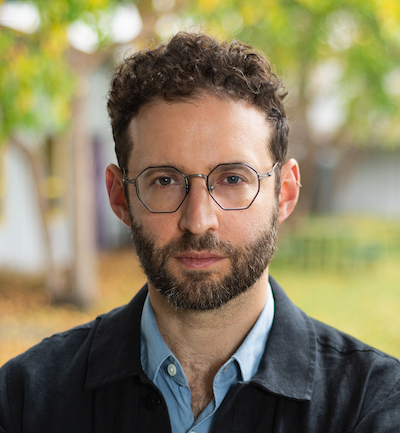


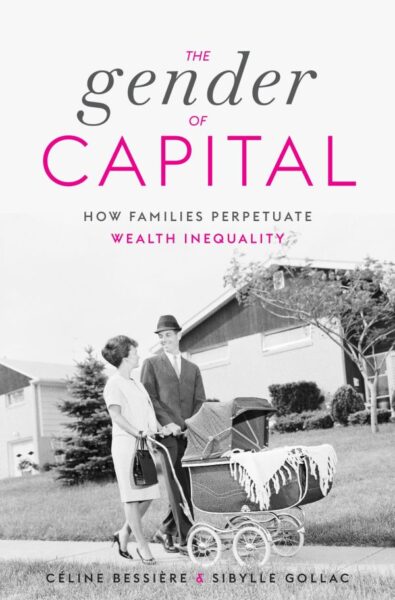 Why do women in different social classes accumulate less wealth than men? Why do marital separations impoverish women while they do not prevent men from maintaining or increasing their wealth? In this lecture, Céline Bessière will discuss her new co-authored book, The Gender of Capital, which reconsiders the effectiveness of legal reforms that legislate formal equality between men and women, while permitting inequality to persist in practice.
 Céline Bessière is Professor of sociology at Paris Dauphine University (PSL University) and a senior member at the Institut Universitaire de France. She is currently a visiting professor at the Institute of French Studies at New York University. She studies the material, economic and legal dimensions of family, in particular through the analysis of inheritance and marital breakdown. Her new project is about gender and wealth accumulation in Europe. Her research is at the crossroads of several fields: economic sociology, sociology of law and justice, sociology of gender, class and family. Her most recent book, The Gender of Capital, was recently adapted into a graphic novel with Jeanne Puchol.







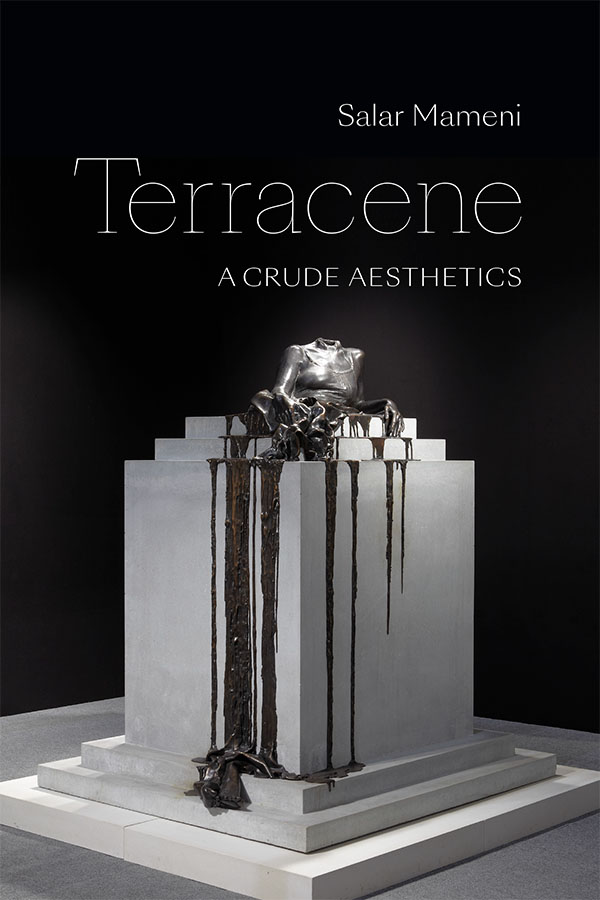
 In Terracene, Professor Salar Mameni historicizes the popularization of the scientific notion of the Anthropocene alongside the emergence of the global war on terror. Mameni theorizes the Terracene as an epoch marked by a convergence of racialized militarism and environmental destruction. Both the Anthropocene and the war on terror centered the antagonist figures of the Anthropos and the terrorist as responsible for epochal changes in the new geological and geopolitical world orders. In response, Mameni shows how the Terracene requires radically new engagements with terra (the earth), whose intelligence resides in matters such as oil and phenomena like earthquakes and fires. Drawing on the work of artists whose practices interrogate histories of settler-colonial and imperial interests in land and resources in Iran, Iraq, Yemen, Kuwait, Syria, Palestine, and other regions most affected by the war on terror, Mameni offers speculative paths into the aesthetics of the Terracene.


