Please join us on February 5th from 12pm-1:30pm for an Authors Meet Critics panel on the book Co-Motion: Re-Thinking Power, Subjects, and Feminist and Queer Alliances, by Paola Bacchetta, Professor and Chair of the Department of Gender and Women’s Studies at UC Berkeley.
Professor Bacchetta will be joined in conversation by Roshanak Kheshti, Professor of Theater, Dance, and Performance Studies at UC Berkeley, and Leti Volpp, Professor and Robert D. and Leslie Kay Raven Chair in Access to Justice at UC Berkeley School of Law. Lawrence Cohen, Professor of Anthropology at UC Berkeley, will moderate.
The Social Science Matrix Authors Meet Critics book series features lively discussions about recently published books authored by social scientists at UC Berkeley. For each event, the author discusses the key arguments of their book with fellow scholars. These events are free and open to the public.
This event is co-sponsored by the UC Berkeley Institute for South Asia Studies, and the Department of Anthropology; Department of Gender and Women’s Studies; Department of Theater, Dance, and Performance Studies; and Department of French Studies.
About the Book

In Co-Motion, theorist Paola Bacchetta proposes a new lexicon for analyzing power, subjects and alliances. Employing what she calls ‘theory-assemblages’ to describe how diverse theoretical and political approaches inspire movements and produce different kinds of alliances, Bacchetta engages the inseparability of power relations—such as colonialism, capitalism, racism, caste, misogyny, and speciesism—and how their combinations, operability, and the analyses they require, shift in different contexts and lives of subjects. Focusing on France, India, Italy, and the US from the 1970s to the present, Co-Motion addresses a wide activist, artivist, and social movement archive— group statements, banners, pamphlets, graffiti, posters, poetry, sit-ins, films, art exhibits—to think and feel with the many ways that people, historically and today, come together to act. Through her expansive engagement with varied bodies of scholarship, sites of analysis, and kinds of reading, Bacchetta offers new approaches to analyze, confront, and transform power, and to enact freedom.
Panelists
 Paola Bacchetta is Professor and Chair in the Department of Gender and Women’s Studies at UC Berkeley. She was the first Chair of Berkeley’s Gender Consortium. She currently serves as Co-coordinator of Decolonizing Sexualities Network, a transnational convergence of scholars, artivists and activists. Her other books include Fatima Mernissi For Our Times, co-edited with Minoo Moallem (New York: Syracuse University Press, 2023); Global Raciality: Empire, Postcoloniality, and Decoloniality, co-edited with Sunaina Maira, Howard Winant (New York: Routledge, 2019); Femminismi Queer Postcoloniali (co-edited with Laura Fantone, Verona, Italy: Ombre Corte, 2015); Gender in the Hindu Nation (India: Women Ink, 2004); and Right-Wing Women (co-edited with Margaret Power, New York: Routledge, 2002). She has published over 70 articles and book chapters on: feminist queer decolonial theory; transnational feminist and queer theory; lesbian and queer of color theorie artivisms and activisms; decolonial feminist translating; gender, sexuality and right-wing movements (India, France, U.S., Brazil). She has translated multiple texts, including Fatima Mernissi’s only (co-authored) film project, The Lionesses (French to English). She recently oversaw the translation of Gloria Anzaldúa’s Borderlands/La Frontera : The New Mestiza into French (2022). She is the recipient of multiple awards: Harvard Divinity School, Fulbright, Mellon Foundation, State of Kerala Erudite Scholar Award, European Union funding awards, France-Berkeley Fund award, and more.

Leti Volpp is the Robert D. and Leslie Kay Raven Professor of Law in Access to Justice and the Director of the campus-wide Center for Race and Gender at UC Berkeley, where her research focuses on questions of immigration and citizenship. Her most recent publications include “Crossing Borders, Criminality, and Indigenous Sovereignty” in Critical Times (2024) and “Weep the People: On the Limits of Citizenship,” in UC Law Review (2024). She is the editor of Looking for Law in All the Wrong Places: Justice Beyond and Between (with Marianne Constable and Bryan Wagner) (Fordham University Press, 2019), and of Legal Borderlands: Law and the Construction of American Borders (with Mary Dudziak) (Johns Hopkins University Press, 2006). At Berkeley, she is also an affiliate of the Jurisprudence and Social Policy Program, the Designated Emphasis in Critical Theory, the Center for the Study of Law and Society, Gender and Women’s Studies, and the Institute for European Studies. She is also a core faculty member of the Othering and Belonging LGBTQ Citizenship Cluster and the Berkeley Interdisciplinary Migration Initiative.
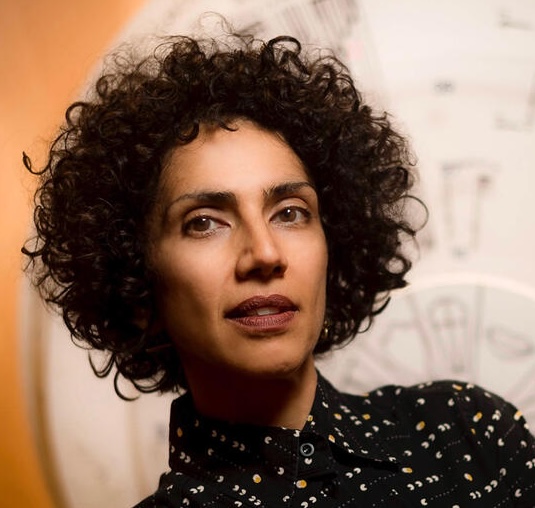 Roshanak Kheshti is an anthropologist, feminist, queer and race theorist, born in Tehran, Iran, and raised in Nashville, Tennessee. Her work sits at the intersection of sound, the senses, film and performance studies with an emphasis on diaspora and psychoanalysis. She is the author of Modernity’s Ear: Listening to Race and Gender in World Music (NYU Press, 2015) and Switched-on Bach (Bloomsbury Academic, 33 1/3, 2019). She is currently completing her third book, tentatively titled “We See with the Skin: Zora Neale Hurston’s Synesthetic Hermeneutics”. She has previously published in the Radical History Review, American Quarterly, Current Musicology, Feminist Media Histories, Hypatia, Feminist Studies, GLQ, Theater Survey, and Sounding Out!

Lawrence Cohen is Professor in Anthropology and South and Southeast Asian Studies at UC Berkeley and the co-director of the Medical Anthropology Program. His current work is on large genealogical platforms and on the discovery of unknown kin as a mode of relatedness, with attention in particular to how kinship was digitized and monetized before the advent of genetic relatedness platforms. Like his work on Indian surveillance and platform capitalism, the focus is on “de-duplication” as an emergent rationality of both relationship and of truth. Much of this work has been centered in urban north and central India, particularly in Delhi, Kolkata, Lucknow, Mumbai, Patna, and Varanasi. In addition to working with undergraduate and graduate students and postdoctoral scholars at UC Berkeley, he has held appointments at the University of Zurich and Tokyo University. His primary appointment at UC Berkeley is in the Department of Anthropology, with a secondary appointment in the department of South and Southeast Asian Studies. He was hired sometime in the previous century to teach medical anthropology, and became a part of a terrific group of scholars in the Joint UC Berkeley-UCSF Medical Anthropology Program. He currently co-directs the Berkeley side of this two-campus program. Previously he directed the Institute for South Asia Studies and held the Sarah Kailath Chair in India Studies.
View Map




 Mathematicians and engineers of the 1940s set out to design machines that could act as ideal rational agents in the face of uncertainty. In this pursuit, a cluster of foundational mathematical technologies — including information theory, linear programming, game theory, and neural networks — emerged as a foundation for a mathematical formalization of rationality, reshaping how we think about human decision-making itself. The Irrational Decision traces how a narrow mathematical framework for computing came to define rationality in economics, public policy, and popular culture.

 Barry Eichengreen
 Rohan Kekre


 In Incommunicable, Charles L. Briggs examines the long-standing presumptions that medical discourse translates easily across geographic, racial, and class boundaries. Bringing linguistic and medical anthropology into conversation with Black and decolonial theory, he theorizes the failure in health communication as incommunicability, which negatively affects all patients, doctors, and healthcare providers. Briggs draws on W. E. B. Du Bois and the work of three philosopher-physicians—John Locke, Frantz Fanon, and Georges Canguilhem—to show how cultural models of communication and health have historically racialized people of color as being incapable of communicating rationally and understanding biomedical concepts. He outlines incommunicability through a study of COVID-19 discourse, in which health professionals defined the disease based on scientific medical knowledge in ways that reduced varieties of nonprofessional knowledge about COVID-19 to “misinformation” and “conspiracy theories.” This dismissal of nonprofessional knowledge led to a failure of communication that eroded trust in medical expertise. Building on efforts by social movements and coalitions of health professionals and patients to craft more just and equitable futures, Briggs helps imagine health systems and healthcare discourses beyond the oppressive weight of communicability and the stigma of incommunicability.


 Armando Lara-Millán


 Anna Feign
 Andrea Lara-García
 Sophia Perez


 Daniela Cammack
 Alison McQueen
 James Porter
 Marianne Constable

