


Camilla Hawthorne and Brittany Meché know firsthand what it means to be outsiders.
As black female scholars, they frequently stand out in the spaces where they work, whether on their research fieldwork sites (in Italy and the African Sahel, respectively) or in their academic home in the UC Berkeley Department of Geography.
In a recent publication in Society & Space, “Making Room for Black Feminist Praxis in Geography,” the two PhD candidates explore how their gender and race has left them excluded from their own field.
“Geography, much like its cousin anthropology, was born from European colonial expansion…and was fundamental to the articulation of Enlightenment scientific racisms,” they write. “Today, through Geographic Information System (GIS) mapping, modern-day ‘expeditions’…, and data-driven policing collaborations, geography is still directly implicated in processes of militarization and violence. The institutional legacies of geography further manifest themselves in the underrepresentation of black graduate and undergraduate students and faculty, the failure of geography to take seriously questions of race and racism…, the invisibilization of black geographies, and the Eurocentric canon we are taught.”
Through their essay, written largely in a dialogue format, the two scholars lay out their vision for a “Black Feminist Praxis” within the field of geography—feminist practice that does not see race as falling outside the domain of feminism, but rather as integral. They describe being inspired by “the work of groundbreaking black feminist geographers” who worked to “hold our discipline accountable to a diversity of intellectual traditions.”
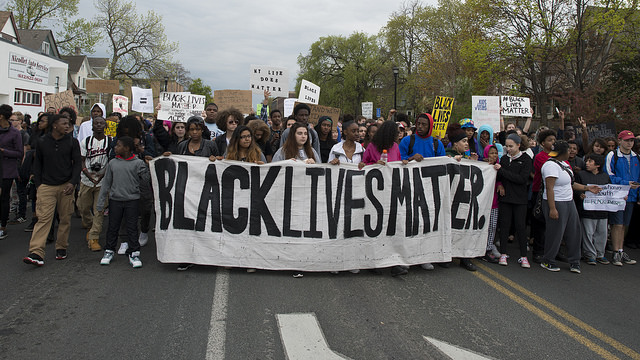
In an interview, Hawthorne explains that she was inspired to write the article with Meché while preparing for her qualifying exams, as she felt a “disconnect between the ongoing Black Lives Matter mobilizations and the very white, abstract, universal theory that I found myself learning.” She was motivated by the “everyday experiences of being a black geographer in a predominantly white field, being a black academic working in Italy, and all these spaces where I felt like the research I was doing didn’t quite fit anywhere.”
For many students from underrepresented backgrounds, this experience sounds all too familiar. The sense of disconnect can come from not being able to see themselves—whether among their peers, in their canon, or on their faculty. As Hawthorne and Meché describe in their essay, African-American students are significantly underrepresented in elite universities. Hawthorne points to an article noting there were just 46 total black geographers working as full-time higher education faculty in the U.S. in 2003. The situation has not improved since then, as more recent data—published in The Atlantic and based on scoring by Indiana University’s Center for Postsecondary Research—found that “roughly 100-odd “very high research activity” institutions saw their percentage of black undergraduates shrink between 1994 and 2013….”
Exclusion isn’t just a numbers game. It’s also visible in what students read—or don’t read. Hawthorne and Meché are critical of what they argue is a Eurocentric canon that excludes too many people of color. “Students of color respond incredibly well to seeing people who look like them do extraordinary things,” Meché says. “It would mean a lot for all sorts of students to relate to the people they’re reading and the people who are teaching their classes.”
Now represents an ideal time to chart a new course for geography, the two scholars argue, as the current climate of budget cuts in higher education has prompted many in the field to ask, “‘What is geography, moving forward?’” In this uncertainty, she adds, lies “a real opportunity for students of color, for women students, to push and say ‘we have a vision of what geography can be.'”
Counter-canons and self-organization by traditionally underrepresented groups show promise as changes to make the discipline more inclusive. Hawthorne cites the example of a group of black students who self-organized to create the first “Black Geography” specialty group within the American Association of Geographers. The researchers also point to the importance of interdisciplinarity in moving the field forward: Meché (who sponsored a 2015 Social Science Matrix research team) describes how she has benefitted from reaching outside of her discipline, including connecting with students and faculty from Berkeley’s Center for Race and Gender, as well as departments like Ethnic Studies, Anthropology, and African American Studies. “At times I have felt a certain twinge of guilt about ‘stepping out on’ or betraying geography,” she writes. “But, perhaps I am a better geographer as a result of my infidelities.”
Still, the representation of black scholars in geography is not the only problem; how geography addresses race is also a matter of concern, Hawthorne and Meché argue. In the essay, Hawthorne contrasts how black people are often cast not as “sophisticated geographical thinkers engaged in creative processes of world-making” but as “mere victims of geography.”
For example, Hawthorne says, the media’s representation of black people in Italy focuses entirely on the plight of refugees. “The only story you hear [about black people in Italy] is of black people dying in the Mediterranean,” she says. Her own research, by contrast, focuses on the political mobilization of young African-Italian adults, which combats “the logic that there are no blacks in Europe, that Europe precludes blackness.”
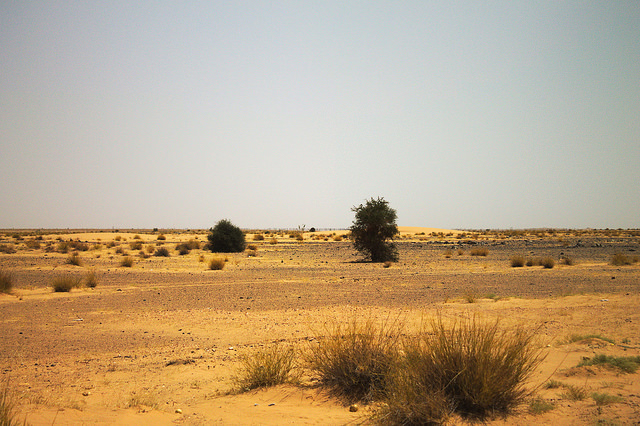 Meanwhile, Meché describes how her gender has affected her experience conducting fieldwork in Sahel, a vast region south of the Sahara. Her research—focused on peacekeeping, disaster response, and military technologies—requires traversing the heavily male-dominated spaces of security studies and counterterrorism.
“One thing that always tends to happen when I do interviews with people is that they quiz me,” she says. “They give a couple of tester questions to see, ‘Is this person actually smart, does she know what she’s talking about?’ And once I jump over the hurdle, that’s when people start to engage with me as an actual scholar who has actual questions that will be worth their while to answer.”
Meché explains that part of the challenge of such scholarship is that the researcher is often expected to leave her own experiences out of the presentation of findings. “Sexual harassment happens in the field, but it doesn’t go into the project,” she says. “You’re looking for a clean picture of what security strategy looks like, a clean project that talks about criminality and security, not the lived encounters that happen when you’re attempting to do this work.”
Through their essay, Meché and Hawthorne hope to give minority students a voice and help more students discover an affinity for geography. “I believe,” Hawthorne writes, “that the work coming out of geography will only improve and be relevant to the challenges of our contemporary world if the discipline (and individual geography departments) makes a concerted effort to attract diverse students and faculty and foster spaces of solidarity and support for those geographers who, through both their research and lived experiences, are already radically transforming the discipline from the margins.”
“The survival and continued relevance of the field,” Meché adds, “will hinge on its ability to embrace and encourage alternate scholarly visions. In this way, making room for black feminist praxis is about making a geography suited to the insurrectionary hopes of the 21st century; or—to borrow a phrase first offered by Aimé Césaire (2001) and taken up by Sylvia Wynter and Katherine McKittrick (2015) and Paul Gilroy (2014)—fostering a geography ‘made to the measure of the world.'”
Top Image Credit: Fibonacci Blue, Creative Commons 2.0 License via Flickr.
Inserted Image Credit: Ammar Hassan, Creative Commons 2.0 License via Flickr.
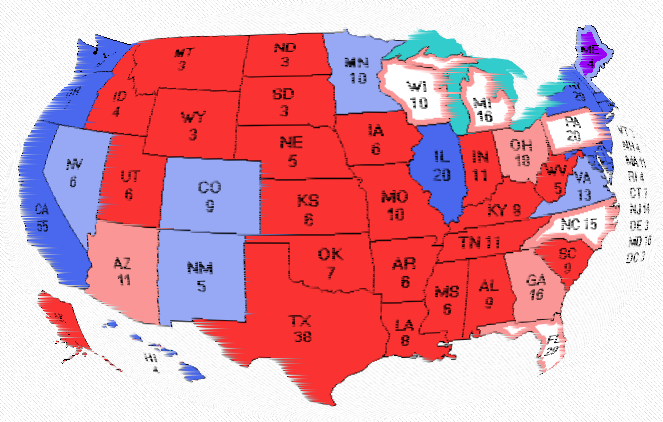
 On November 29th, Social Science Matrix will host a panel sponsored by the Center for Right Wing Studies entitled, “Reflections on the 2016 Election and the Republican Party Under President Trump.” Participants include Dr. Lawrence Rosenthal, Founding Director, Chair, and Lead Researcher of the

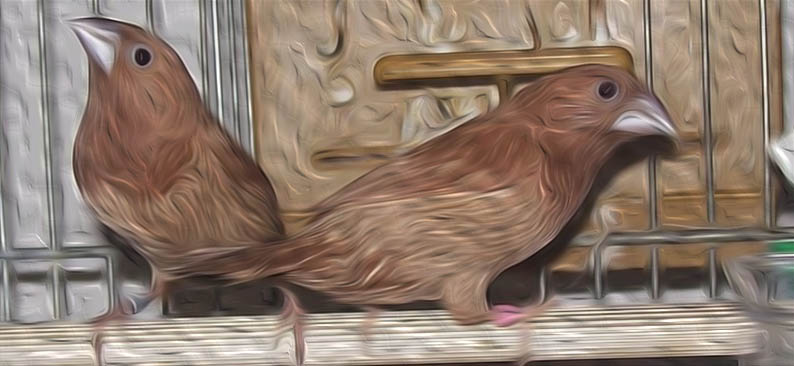
 “The best analogy to human language that one can find is birdsong,” says Madza Farias-Virgens, a doctoral student in UC Berkeley’s Department of Anthropology, citing a comparison that researchers have been making since the publication of Darwin’s The Descent of Man.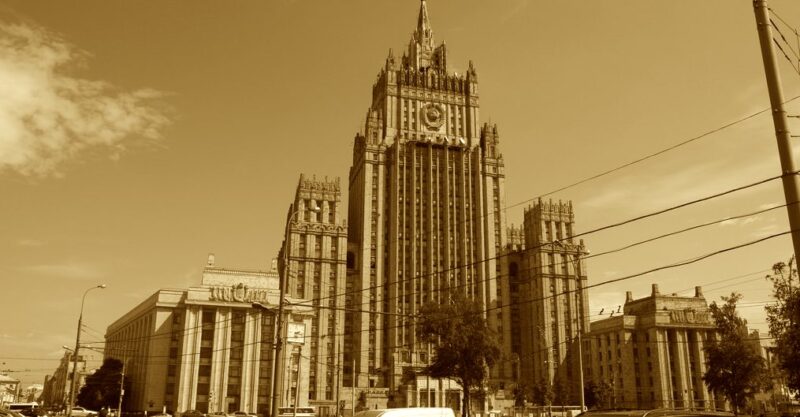
 “The buildings have been pretty much dismissed by history,” says
  In short order, the buildings’ architects came under attack by Stalin-era elites in search of scapegoats for Stalin’s (and their own) misdeeds. Khrushchev, himself a major beneficiary of Stalin’s patronage, joined the chorus of critics at a builder’s conference held in Moscow in December 1954. “Right as they were being realized, these buildings became villains on the Moscow cityscape,” Zubovich notes. The new regime tried to counteract the influence of these steely giants through large-scale,
  Harnessing the skyscraper—once the quintessential symbol of unruly, urban capitalism—and exporting it to capital cities like
 To uncover why someone might find something as seemingly innocuous as low-frequency vocal pitch irritating, we spoke with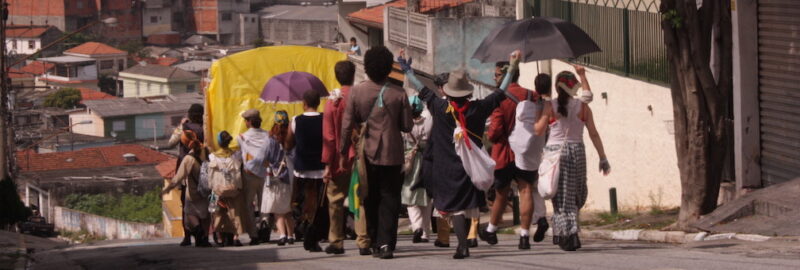
 The interviews, collectively titled “Urbanismo Participativo/ Participatory Urbanisms,” are displayed online in a carefully designed diptych, a conceptual form used in visual art to extend canvases and draw parallels. Readers also have the option of downloading the interviews as a
  This ambitious project statement is fulfilled by the scope and scale of the work itself. The interviewers, including both Larson and Shankar as well as a number of research assistants, elicit provocative, deeply thoughtful reflections on the intersections of time and space, the performance of collectivity, the fact of urban multiplicity, pedagogical practice, voice, mediation, and the relationship between individual city dwellers and city infrastructures. Interviewees reflect on challenging issues of urban informality and inequality—on the fact that, in the words of Ravi Vasudevan of the SARAI Collective, people live in these cities “despite not being allowed to have all sorts of things that they should be allowed to have.”
 Shankar recalls being particularly moved by two of the articles in the “Austerity Politics, Performance, and Occupation” section, which emerged from participant ethnographic research in Athens and Madrids. She and Larson describe these essays thus: “[They] present urgent and vivid ethnographic accounts of the urban manifestations of radical democratic responses to Europe’s contemporary austerity regimes. Andreea Micu’s reading of the affective forms of protest around ongoing housing struggles in Rome and Madrid identifies ‘indignation’ as the prevailing affect in times of austerity…. Her article] explores how this affect is mobilized to powerful effect in street protests…. [Gigi Argyropoulou’s article] describes how emergent and collective participatory practices in the occupied [Embros theatre in Athens during the debt crisis] may have faced repeated failures, but succeeded in marking a paradigm shift, thereby opening up the space of possibles for alternate ‘instituent’ practices of politics and culture in times of austerity.”